Another Game Changer
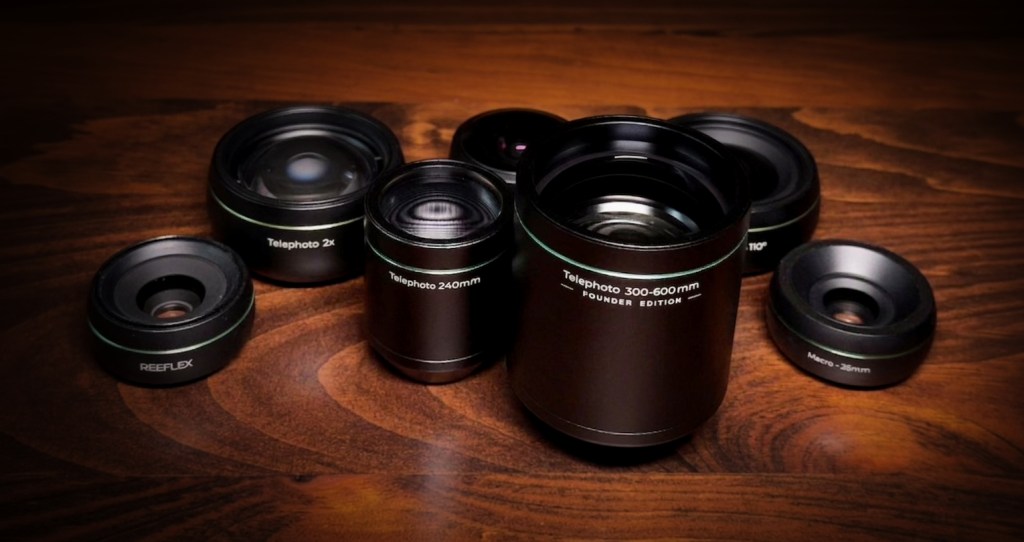
The team at Reeflex has knocked another one out of the park. Since they began producing lenses for mobile phones, their G-Series lens lineup has grown to what I would consider to be ten lenses. Technically, there are only eight, which include: The Fisheye 220º, Macro 10x, Long Range Macro 75mm, Wide Angle 110º, Telephoto 2x, Anamorphic 1.33x, Super Telephoto 240mm, and the newly released Ultra Telephoto 300-600mm. The Macro Add-ons for the 240mm lens, which include a 200mm and 300mm, are like two additional lenses because of the different views they provide in longer range macro work.
The Best Thing That Could Happen
The first group of G-Series lenses that came to the company’s online store were not designed in-house by Reeflex, but the build quality was excellent and the image quality attainable with the lenses easily matched that same standard. With the success and growth of the company came the opportunity to design their own products by their own team, and the Super Telephoto 240mm was their first attempt. This was the best thing that could happen for them because they saw that there was room in the market for a telephoto lens that changed the way we use our smartphone cameras.
The Super Telephoto allowed us to get much closer to our subjects and presented us with a focal length that offered a style of composition that was unique only to traditional cameras. For me personally, I prefer a telephoto lens. Perhaps this is because I used a wide-angle for so many years after selling my Canon gear and going all-in on iPhone for my photography. Oh sure, I had a Reeflex Telephoto 2x since they first introduced their Pro Series line of lenses in 2021, and it was quite good, but the focal length I long desired finally arrived with the introduction of the 120mm camera on the iPhone 15 Pro Max.
This new focal length opened up a whole new photographic journey for me, and most of the images I took with the 15 Pro Max were with that 120mm camera. Then Reeflex did the unthinkable: they introduced the Super Telephoto 240mm Lens, designed specifically for the 120mm camera in the iPhone 15 Pro Max. It’s essentially a 2x conversion, and only works on the telephoto cameras of select smartphones. This blew my mind.
I followed up the 15 Pro Max with the 16 Pro Max that had the same telephoto camera as its predecessor, so the Super Telephoto came in handy there too. Now, I’m using the 17 Pro Max, which has a 100mm Telephoto camera (labelled 4x by Apple) housed around a 48 MP sensor. You can imagine my delight when I realized I could do 48 MP capture from a 100mm camera with the Super Telephoto 240mm lens attached. And, since Apple gave us a 48MP sensor, the 17 Pro Max also has an 8x setting, or 200mm focal length, at 12MP and the quality is pretty good.
Enter the 300-600mm Telephoto
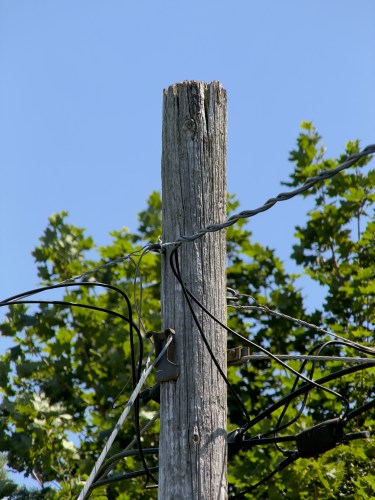
After the successful Kickstarter campaign for the 240, Reeflex went right to work on expanding not just their lens lineup, but the reach of the lenses. The Ultra Telephoto 300-600mm is shipping to eager photographers worldwide, and the image quality from this lens is just fantastic. When I tried my first shot with it, I literally laughed with joy at the quality of the image. It was a simple photo of the top of a utility pole in my backyard, about 15 metres away from where I stood, but I was really taken aback by it.
Before I go any further, I want to preface a couple of things. First, the lens is heavy. If you’ve watched Reeflex’s videos on their YouTube channel, or any of the video reviews by others, that’s one of the first things they’ll say. It’s recommended that you hold the lens, not the phone, when taking photos. And this makes a lot of sense, because if you try to hold your phone like you normally would, you will experience a lot of shake. Holding the lens will definitely help control that, and I’ll expand on that later.
The second thing I want to mention is that with this lens, you will experience some chromatic aberration in some of your images. This is a known issue that just can’t be helped. The Ultra Telephoto, to quote David Addison, a Reeflex content creator, “bends an enormous amount of light through a compact optical design, allowing photographers to get closer to subjects than ever before”, with a good level of sharpness, and saving it to a phone’s small camera sensor. I’ve found this to occur when the light is somewhat bright and there is high contrast in the frame. This isn’t happening with just the Ultra Telephoto lens either; it happens with lenses from other manufacturers as well, and is easily dealt with in an editing program that has an adjustment to remove chromatic aberration. I used the new Affinity, which is a very powerful editor that’s free to use.

The build quality of the Ultra Telephoto is every bit as good as the rest of the G-Series lineup. Made with very solid aerospace-grade aluminum and lanthanum glass, Reeflex chose the right materials to produce a world-class product.
How To Capture The Moment
As I mentioned earlier, this lens has some weight to it in its 308 grams. That’s almost a third of a kilogram. So, to get the best results, you would ultimately use a tripod, but there will be times, most of the time, when you won’t want to use one. I had some great success shooting handheld while following the instructions in the Reeflex tutorial videos featuring David Addison.
David’s tutorials offer instructions for a variety of shooting conditions, and the one that would seem the most difficult was when he went to a race track to shoot fast-moving cars and motorcycles. As luck would have it, I was scheduled to go to a local racetrack with my son and grandson a few days after receiving my lens.
The instructions were simple. On the iPhone, use Reeflex Pro Camera and go manual. Android phones have a better version of built-in camera software that offers more manual control than the iPhone does, so that can be used in those cases. In Reeflex Pro Camera, I simply selected the ISO function and set it as low as it would go, then selected the Shutter Speed and dialled it up to a value higher than the focal length of the lens. This is a common technique used by photographers with traditional cameras when they shoot with telephotos. The rule is this: a shutter speed where the value of the fraction number is higher than the focal length of the lens will get you a sharp image. For example, the lens has a focal length of 300-600mm, and we’ll use the 600mm number here, so a shutter speed of 1/600 or faster should produce a sharp image.
At the races, I captured this handheld shot of these cars coming towards me at a high rate of speed with ISO 100 and a shutter speed of 1/1497th of a second. As you can see, it practically froze the rotation of the tires. The hardest part of the capture process for this type of shooting was making sure the framing was compositionally good, because the camera shake is real. Fortunately, there were enough laps in the race to give me multiple attempts.

Off In The Distance
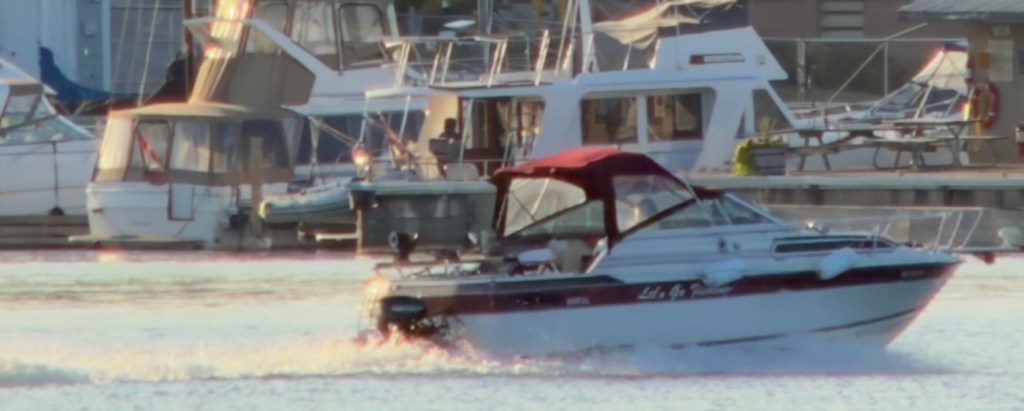
I live in a small city that surrounds a bay, so in the summer months, it’s common to see watercraft going in and out of the marina. In the evening of day one with the lens, I went down to the water to see what I could capture. I was on the east side of the bay, so looking across to the west side, I could see the marina. I set up my tripod and mounted the lens on my iPhone 17 Pro Max, selected 8x in Reeflex Pro Camera, and focussed on a building that sits beyond the marina. I noticed a boat approaching my field of view, so I waited until it entered the frame and took the shot. Pro tip: if you have an Apple Watch, you can install the Reeflex Pro Camera companion app to trigger the shutter remotely to avoid camera shake.

When I tapped my watch, the shutter fired, and I got the shot. Now, here’s the cool part: that building was 1 km away from where I was standing, and this image is not cropped. My mind was blown. Never, in my ten years of being an iPhone-only photographer, would I have ever imagined I could capture a scene up close like this from 1 km away.
And Even Up Close
While at the water, I noticed some purple-loosestrife near the water’s edge. I was about 10 metres away from it so I focused and took the shot. The minimum focus distance of the Ultra Wide is 6.8 metres, so the flowers were fairly close, and the lens captured their detail wonderfully.

Let’s Compare
To put things into perspective regarding just how well the Ultra Telephoto performs in terms of reach, I’ve taken some images with both the Super Telephoto 240mm and the Ultra Telephoto 300-600mm at both focal lengths in the iPhone 17 Pro Max’s Telephoto Camera, the 4x (100mm) and the 8x (200mm). I returned to the water to compare images taken of the building that is 1 km away on the other side of the bay. These images are straight jpg exports from ProRAW files.




There is a public garden at the same location where I took the photos looking across the bay, so I set up my tripod in a spot where I could see through some tree branches, for foreground interest, with some hostas in the centre of the frame.
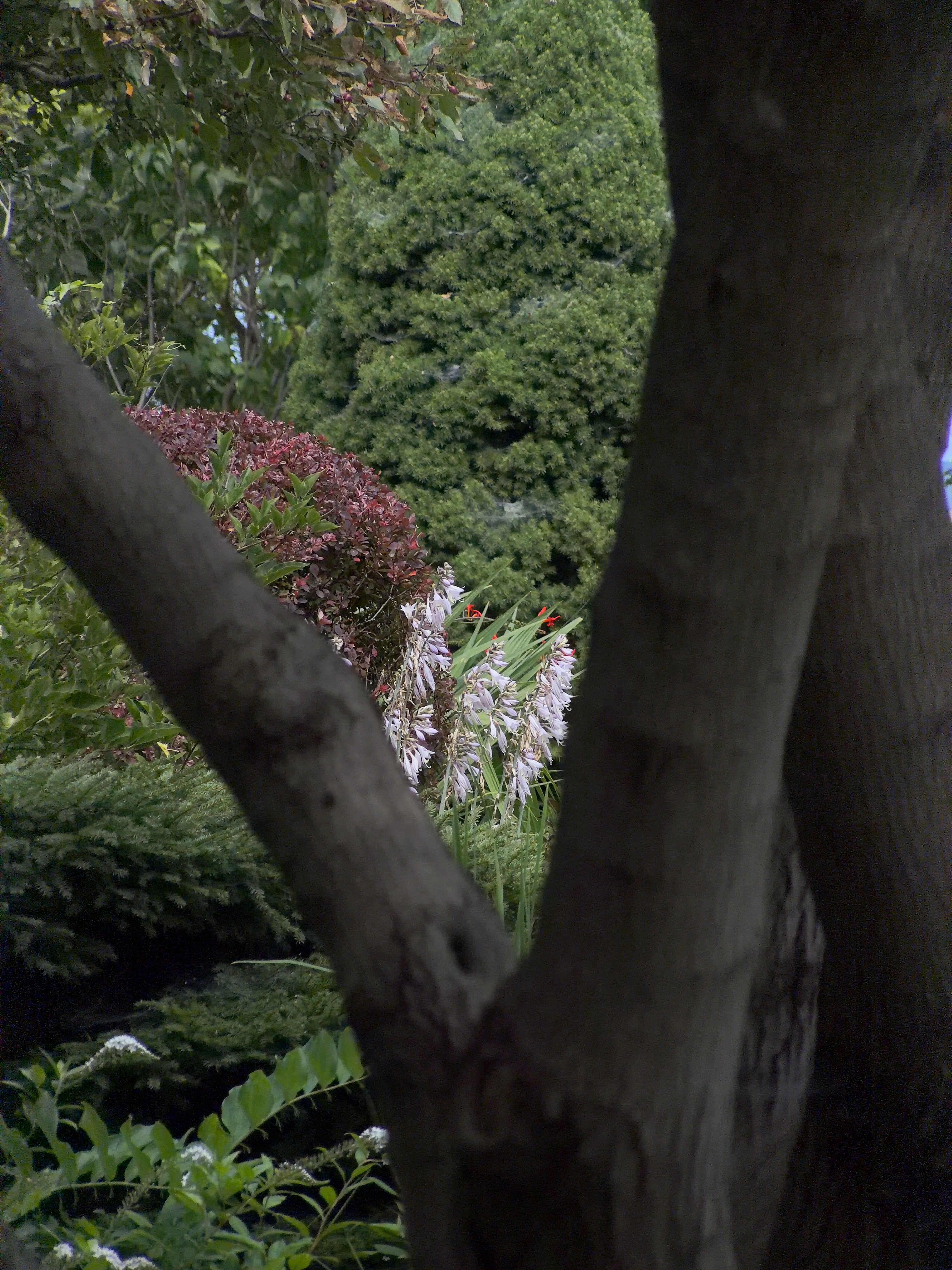
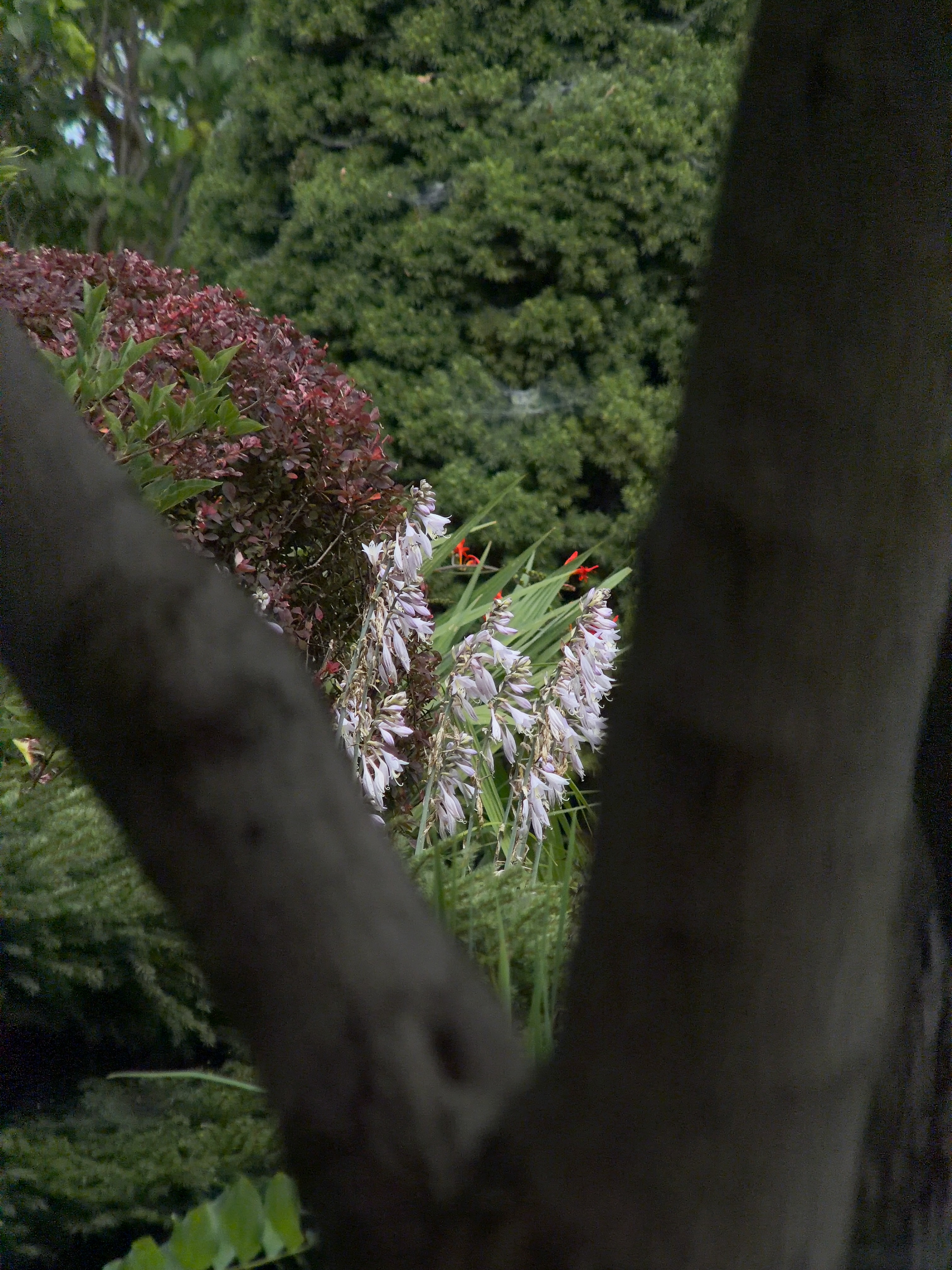
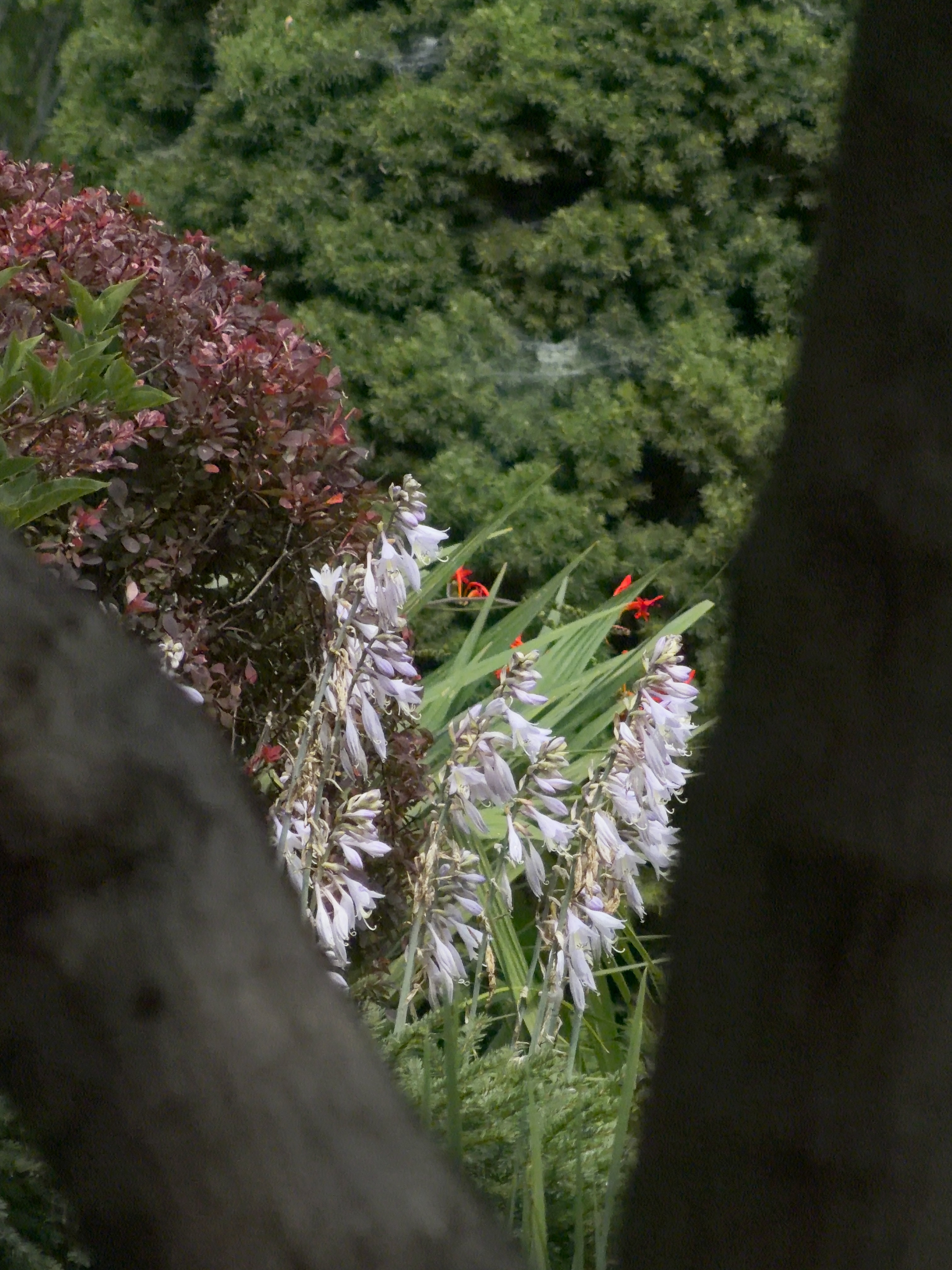
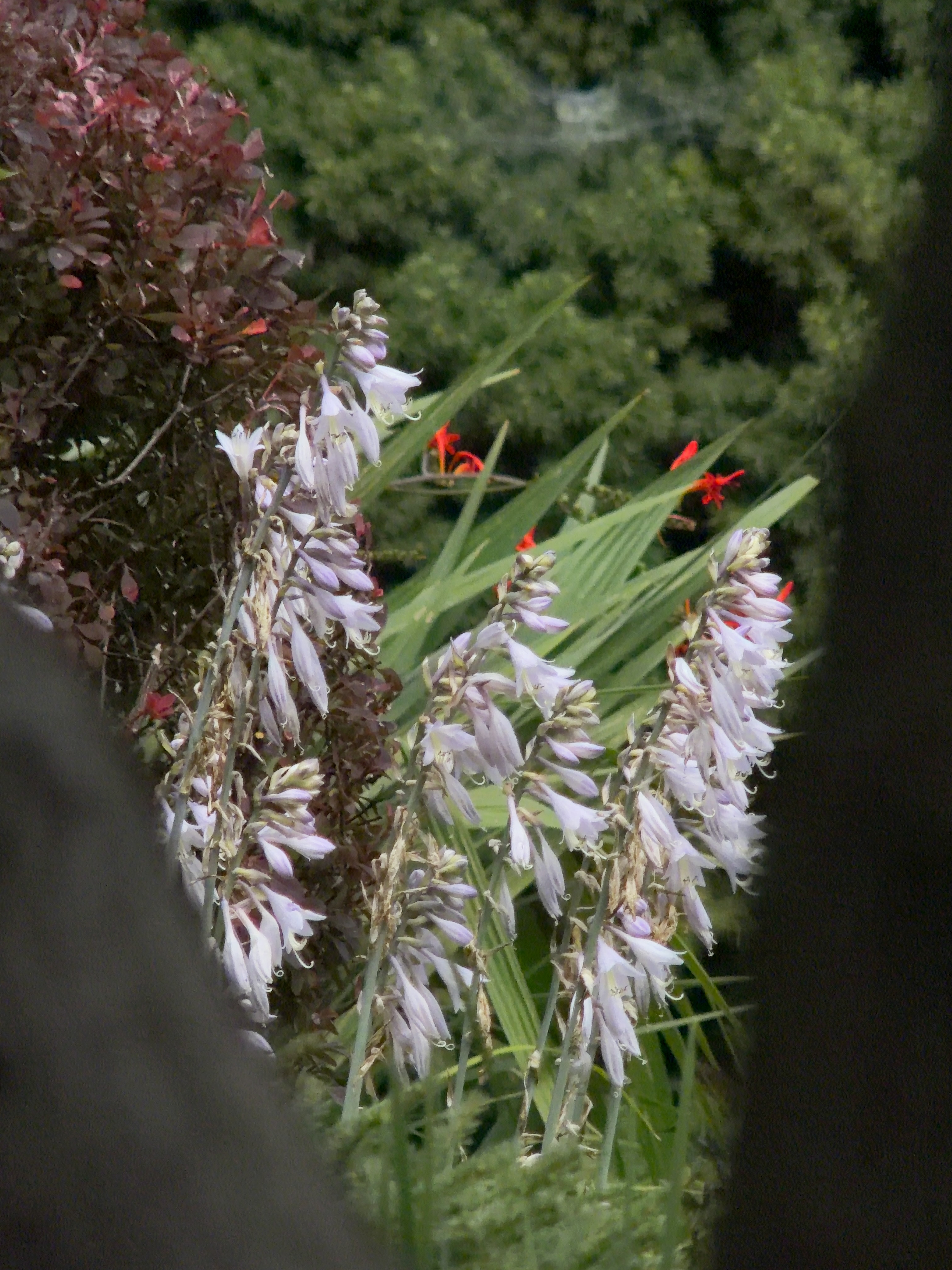
As you can see, having the extra reach with the Ultra Telephoto makes a difference, especially when your subject is far enough away that moving forward for a better view just isn’t possible. Having both lenses lends itself to a nice variety of focal lengths to achieve the right composition for the scene. In the closer shots, the bokeh between the two is comparable, so it really depends on whether or not I would be constricted by the space around me.
Final Thoughts
You might be wondering, who is this lens for? I would say it’s for anyone who wishes to get optically closer to their subjects without digitally zooming, because that’s just wrong in my opinion. This lens is for the landscape photographer, for the portrait photographer, and for the mobile photographer who has been wanting to capture wildlife but has never been able to get close enough without scaring things away. The Ultra Telephoto 300-600mm lens is a remarkable tool to have in your mobile photography kit, and once you master how to use it, you will have a difficult time putting it down. At least I do.
You can learn more about this lens, and all of Reeflex’s products, including pricing, at Reeflex’ website where you can also get 10% off with the code MCMILLAN10 at checkout.
More Images From The Ultra Telephoto